

Clubhouse Audio Rooms Meet Austin Weird
توضیحات
Clubhouse and the Keep Austin Weird Spirit Down Under
Clubhouse is the audio-first social app where people gather in live rooms to talk, listen and swap ideas in real time. For Australian users, that model raises a practical question about how a small, spontaneous, slightly strange local culture finds a voice on a service built for scheduled conversations. The answer sits somewhere between a Texan festival’s philosophy, documented at https://keepaustinweirdfest.com/ , and the way Sydney, Melbourne and Brisbane residents already use Clubhouse to run niche rooms. This review separates the signals worth your attention from the noise that fills most app coverage, then walks through how to use Clubhouse with intent.
What Clubhouse Actually Is and Why the Audio Format Matters
Clubhouse is a live audio service. You join a room, you hear voices, you can raise a hand and speak, or you can simply listen while doing the dishes. There is no video, no feed of edited highlights, no algorithm pushing outrage to the top. Rooms open, they run, they close. The recording usually does not persist unless a host explicitly saves it. That single design choice changes the social texture of everything happening inside the app. On Clubhouse, a conversation is an event, not a post. You had to be there.
For Australian users, this creates a different rhythm. A room hosted at 7pm AEDT lands at an awkward hour for Perth, and a room built for a US evening audience can land at 9am Sydney time. Time zones are not a bug in Clubhouse. They are the first thing you learn to manage. Once you do, the app becomes genuinely useful for small communities that would otherwise never share a microphone.
Filtering the Noise Around Clubhouse in Australia
Most writing about Clubhouse drowns in hype or dismissal. Neither helps you decide how to spend an evening. The useful signal is narrower. Ask three questions before you join any room. Who is hosting? What is the stated topic? How many speakers are talking over each other? If the answers are vague, the room is noise. If the answers are specific, the room is signal. That is the whole filter.
Australian Clubhouse users tend to reward specificity. A room called “AFL trade rumours with actual list managers” outperforms a room called “Sports talk”. A room about Melbourne laneway coffee culture outperforms a generic “food chat”. The app rewards the same instinct that drives local events, markets and small festivals. Distinctive beats broad every time.
How the Keep Austin Weird Idea Connects to Clubhouse Rooms
The Keep Austin Weird movement began as a campaign to protect independent local businesses in Austin, Texas, from being flattened by chain stores. Its core claim is simple. A city’s character comes from the odd, specific, unpolished things that locals build. The festival site at keepaustinweirdfest.com collects that ethos into a recurring public event. The parallel with Clubhouse is not decorative. It is structural. Both depend on people showing up as themselves, in public, without a marketing team smoothing the edges.
On Clubhouse, the equivalent of a weird local festival is a recurring room run by the same host, on the same topic, at the same time each week. It is small. It is unglamorous. It builds a following because the host does not chase trends. Rooms like this exist in Australia already. A weekly room on regional footy. A room for surf report nerds on the NSW south coast. A room for people restoring old Holdens. None of these would survive as a video channel. As live audio on Clubhouse, they work.
A Step by Step Approach for Australian Clubhouse Users
The following sequence is what separates a productive Clubhouse habit from scrolling through empty rooms. Work through it in order. Do not skip steps because a room looks interesting. The order matters.
- Set your Clubhouse profile name to something a stranger can repeat out loud.
- Follow five hosts, not fifty, in your first week.
- Pick two recurring rooms that fit your time zone and attend both every week.
- Listen for three sessions before you raise your hand to speak.
- Note the host’s moderation style, because it decides whether the room stays useful.
- Mute yourself when you join any room, then unmute only when called on.
- Leave rooms that drift off topic within the first ten minutes.
- Start your own room only after you can describe it in one sentence.
- Schedule your room at a time that suits at least one other Australian city.
- Invite two people you actually know, not a contact list blast.
- Review after four weeks whether the room still has a reason to exist.
Where Clubhouse Fits and Where It Does Not
Clubhouse is not a replacement for a podcast, a group chat or a conference. Each of those does something the app does not. A table makes the boundaries clearer.
| Format | Best For | Weakness on Clubhouse |
|---|---|---|
| Live audio room | Debate and Q&A in real time | No searchable archive by default |
| Podcast | Polished long form publishing | Clubhouse rooms are not edited |
| Group chat | Small private coordination | Clubhouse rooms are public |
| Conference | Structured multi day events | Clubhouse has no ticketing |
| Social feed | Asynchronous updates | Clubhouse has no post history |
| Webinar | One to many teaching | Clubhouse expects many to many |
| Community forum | Searchable written threads | Clubhouse conversations vanish |
Costs and Practical Settings Worth Your Attention
Clubhouse is free to download and free to use. The app runs on iOS and Android, and a web version exists for listening and joining rooms from a desktop browser. There is no subscription required to host. Some hosts run paid ticketed rooms, but that is a host choice, not a requirement of the service. In Australia, data usage is the real cost. A one hour room at typical audio bitrates uses roughly 40 to 80 MB, which is minor on a home connection and worth watching on mobile data.
Settings that matter more than most users realise include notification controls, because Clubhouse can ping you for every room your followed hosts open, and the hand raise queue, which decides your speaking order. Turning off unnecessary notifications is the single change that keeps the app from becoming noise in your pocket.
The Signal to Keep From All of This
Clubhouse rewards people who show up consistently and speak plainly. The Australian users getting value from it are not chasing follower counts. They are running small rooms on specific topics, at times that suit their own city, and inviting the same handful of people back each week. That is the same logic behind every independent local scene, from a Brisbane zine fair to a Texan festival with a stubborn slogan. The tools differ. The behaviour does not. If you filter out the hype, set your profile up properly, follow a few hosts, and commit to one recurring room, Clubhouse becomes exactly what it claims to be: a place to talk. Everything else is noise, and you can safely ignore it.
دیدگاه ها
درباره mohrsa
مشاهده همه نوشتههای mohrsaدسته بندی ها
محصولات
-
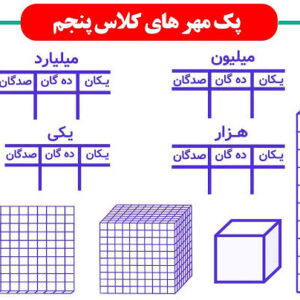 پک مهر کلاس پنجمی ها
700,000 تومان
-
 پک مهر کلاس چهارمی ها
700,000 تومان
-
 پک مهر کلاس سومی ها
700,000 تومان
-
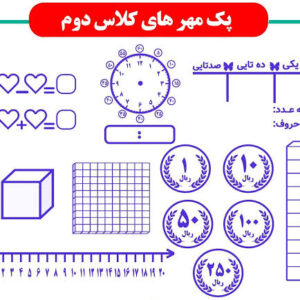 پک مهر کلاس دومی ها
700,000 تومان
-
 پک مهر کلاس اولی ها
700,000 تومان